
Presented at the University Book Café
From Everyday Social Environments to Clinical Practice: Applications of Social Cognition in Speech Therapy
A faculty member of the University of Social Welfare and Rehabilitation Sciences explored the multidimensional nature of social cognition, outlined the key factors influencing social skills, and highlighted the critical role of social cognitive processes in speech-language pathology assessment and clinical intervention.
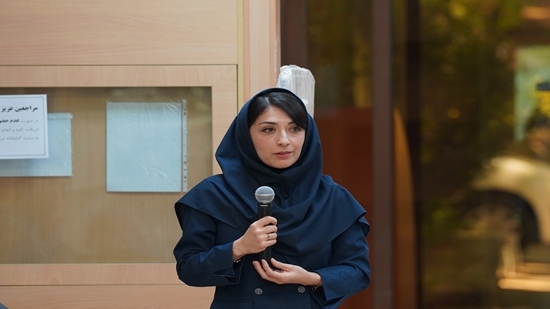
Faculty Member Discusses Social Cognition and Its Role in Everyday and Clinical Interactions at University Book Café
According to the University News Correspondent, Dr. Samaneh Sazegarnejad, faculty member of the Department of Speech Therapy at the University of Social Welfare and Rehabilitation Sciences, delivered a lecture at the University's Book Café, focusing on the concept of Social Cognition and its significance in both everyday social interactions and clinical practice.
During the session, Dr. Sazegarnejad described social cognition as a collection of cognitive processes that enable individuals to perceive, interpret, and respond effectively to social information. She highlighted several key components of social cognition, including social attention, social perception, Theory of Mind, and Executive Functions, emphasizing their essential role in shaping appropriate social behavior.
She noted that these cognitive processes occur rapidly and often automatically, allowing individuals to understand social situations, process environmental cues, and generate contextually appropriate responses within fractions of a second.
Dr. Sazegarnejad also discussed the factors influencing the development of social skills, explaining that environmental context, prior experiences, internal mental representations, feedback from others, and personal knowledge and goals all contribute to social functioning.
Emphasizing the close relationship between social cognition and mental health, she stated that disruptions in these cognitive processes may adversely affect interpersonal relationships, communication, and social adaptation.
On the sidelines of the event, the Persian and English versions of the University's Publishing Office website were officially unveiled. Newly acquired books from the University's virtual book fair, held in May, were also introduced to attendees.
The event concluded with the presentation of the book Teaching Theory of Mind and Social Skills and the introduction of newly published resources by the University Press, providing an opportunity for academic discussion and knowledge exchange in the field of social cognition and communication skills.

نظر دهید